 Servflow
Creating Agents
Doesn't Have To Be Hard
The management layer your team needs to build, run and benchmark agents in production. Across the apps your team already uses.
 Join the community
Agent designer and runtime.
Design your agent visually. Lay out its prompts, tools, decision branches and guardrails on a single canvas, then run it on the same platform you built it in.
Add a sub-agent, attach its tools, pick its model. See the whole architecture at a glance instead of tracing it through code.
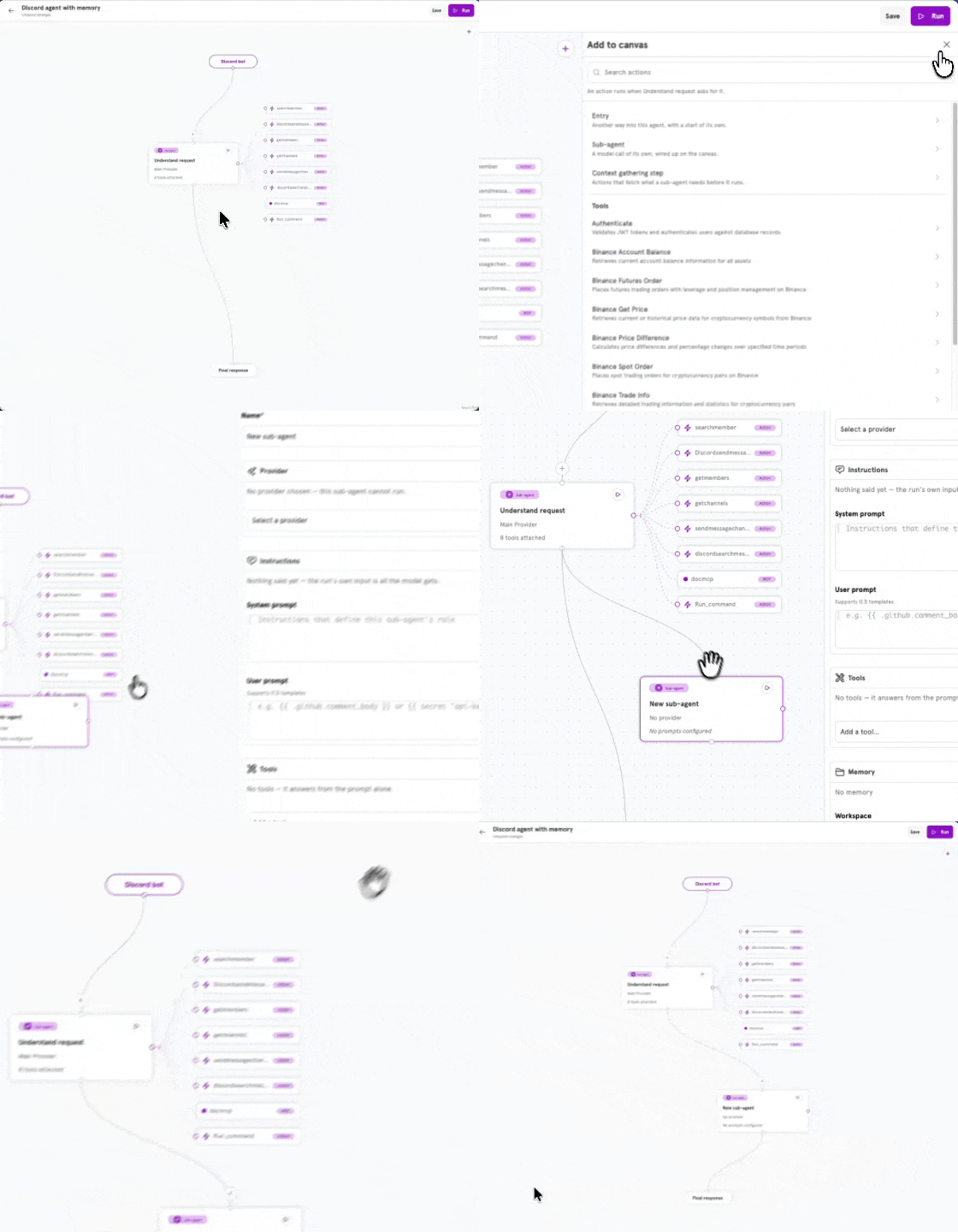
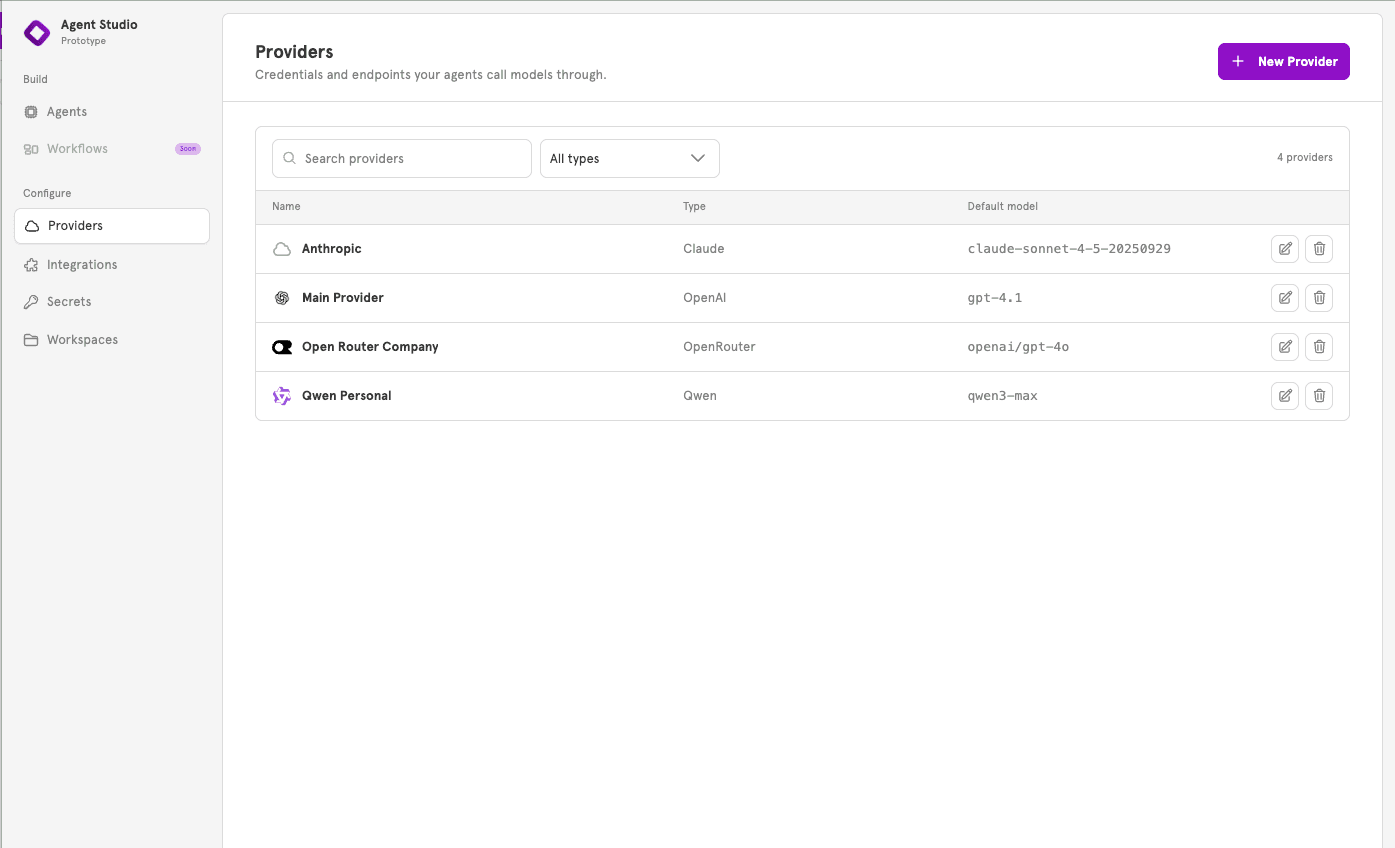
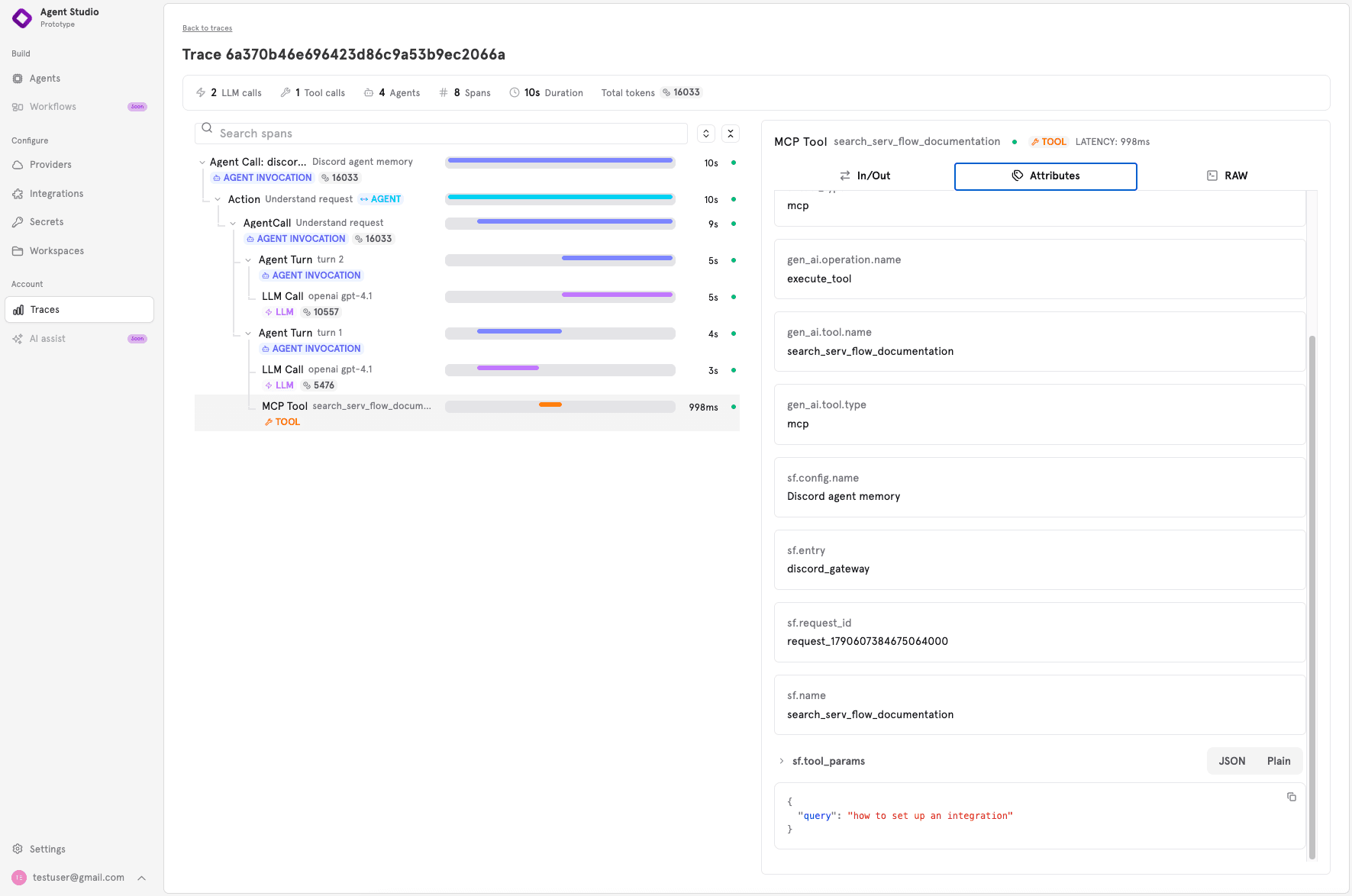
Empowering technical and non-technical agent builders.
Product and ops teams design agents on the canvas. Engineers open the same agent as YAML to review it in a pull request, version it in Git, and ship it with the rest of the code.
name: Support triage
config:
  entries:
    - type: handler
      handler: github
      start: agent.classifier
  agents:
    classifier:
      providerID: 1
      systemPrompt: Label the issue.
      next: agent.researcher
    researcher:
      providerID: 2
      tools: [web_search, http, github_mcp]
      next: agent.responder
    responder:
      providerID: 1
      next: end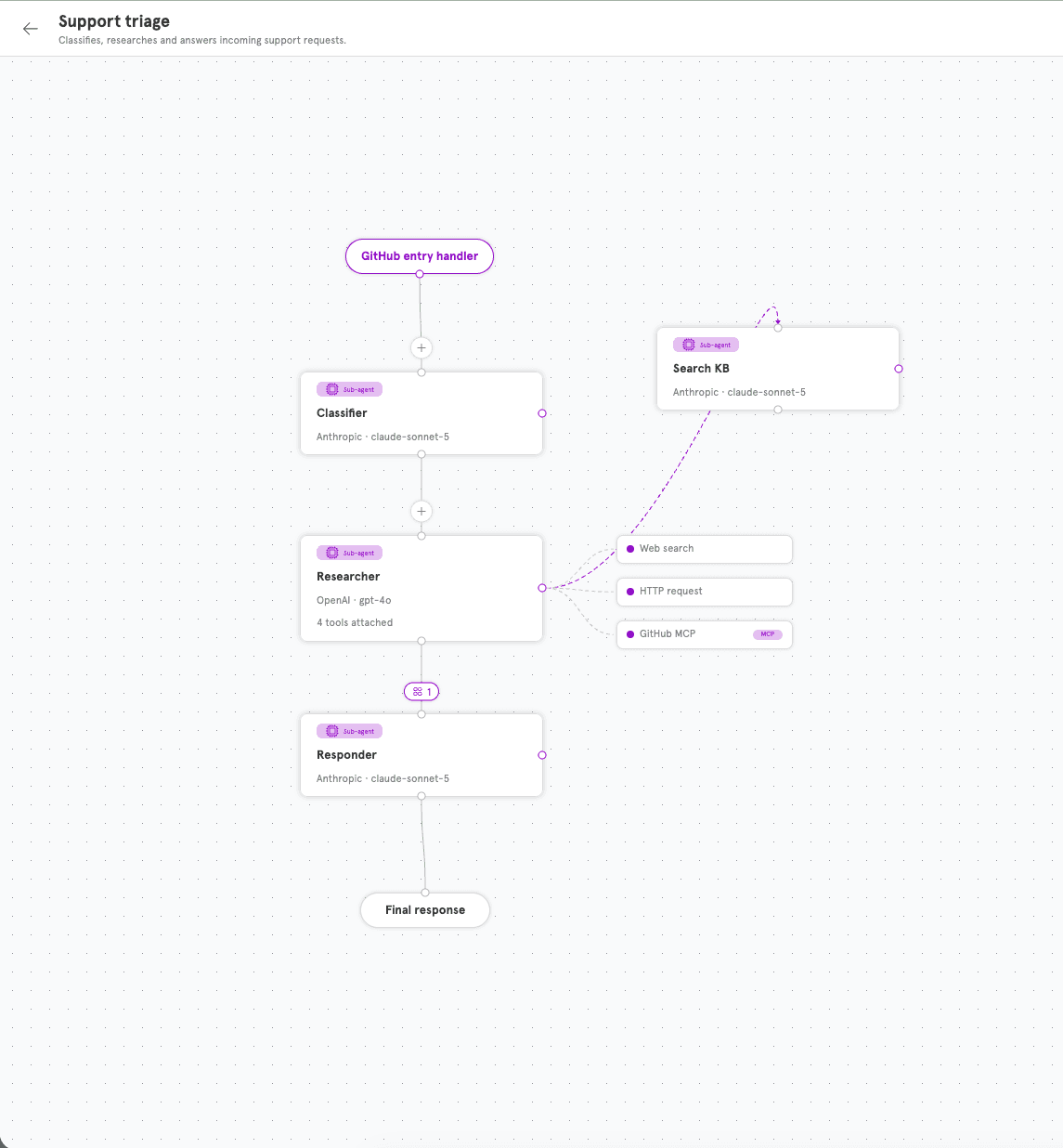
Built for security and production-grade load.
Agents run shell commands, read files and call tools. Servflow runs all of it inside an operating-system sandbox, on an engine written in Go so it stays small and quick.
$ git clone repo && make test{{ secret "github-token" }}100s of services and actions, a tool call away
Sign in to the apps your team already uses and their actions show up as tools, next to ServFlow's own. Point a sub-agent at an MCP server, or hand a task to another sub-agent on the canvas.
SlackSend message · Search messages · Create canvas
GmailSend email · Reply to thread · Create draft
Google CalendarCreate event · Find free slots
NotionCreate page · Query database
JiraCreate issue · Transition issue
LinkedInCreate post · Comment on post
 DiscordSend message · Search messages · Read server
- GitHubFetch pull request · Post comment
 GiteaFetch pull request · Post comment
 BinanceSpot order · Get price
- HTTP Request
- JavaScript
- Shell Script
- SQL & MongoDB
- Vector search
- Send Email
- JWT & Auth
- Any MCP server
- Call sub-agent
See it in action.
Watch an agent go from an empty canvas to a working run.
Choose your plan
Every plan is fully managed. Start free and upgrade as your agents take on more work.
Free
A permanent free tier for building and trying out agents.
- 10 agent runs per minute
- 3 enabled agents
- 3 concurrent runs
- 10 AI assist messages per month
- Fully managed hosting
- Trace viewer
Starter
Most popularFor teams putting their first agents into production.
- 250 agent runs per minute
- 20 enabled agents
- 20 concurrent runs
- 100 AI assist messages per month
- Fully managed hosting
- Trace viewer
Pro
For agents running at higher volume and concurrency.
- 500 agent runs per minute
- Unlimited enabled agents
- 50 concurrent runs
- Unlimited AI assist messages
- Fully managed hosting
- Trace viewer
Join our mailing list
Product updates, new integrations and the occasional demo.
Looks good. One fix: the error from
parseConfigis dropped atconfig/load.go:42.